

The National Program for Gifted Identification

The National Program for Gifted Identification

clock icon There are only 41 days left until the registration deadline

Introduction

Driven by the dedication of the late Custodian of the Two Holy Mosques, King Abdullah bin Abdulaziz, may Allah rest his soul in peace, and the steadfast support from the wise leadership of the Kingdom of Saudi Arabia toward all matters related to identifying and nurturing gifted individuals, the need arose to strengthen and consolidate ongoing efforts in this area. This led to the creation of a national joint project, executed by expert national authorities with qualified personnel in the area. Consequently, the firm belief in the importance of identifying and fostering this exceptional and vital group was reinforced, with the aim of transforming Saudi society into a knowledge-based society capable of achieving sustainable development.

The initiative commenced in 2011 with a strategic partnership between Mawhiba, the Ministry of Education, and the National Center for Assessment (Qiyas) to establish and implement the "National Program for Gifted Identification" using standardized tools and criteria. A model was developed to identify gifted students through an advanced scientific methodology, grounded in key scientific principles and educational best practices, ensuring the effective selection of promising students. This model resulted in the development of a comprehensive and extensive database of gifted students throughout all regions and cities of the Kingdom, encompassing all age groups within general education.

Objectives

  • Identifying gifted male and female students across the Kingdom in the fields of science and technology.
  • Developing an integrated ecosystem and a thorough methodology for identifying gifted students.
  • Ensuring fairness in the selection of gifted students and nurturing their development by directing them to the appropriate care program.
  • Building a comprehensive and detailed database of gifted students throughout the Kingdom.
  • Contributing to raising community awareness about the characteristics of gifted individuals and the importance of identifying them.
  • Contributing to the enrichment of scientific research sources and the Arabic library in gifted identification.
Achievements
Partners


MOE Newlogo
Partner 2
Registration/Nomination Requirements

Note: Registration for the National Program is open from October 1st to December 23, 2025.

Eligibility Criteria

  • Students must be from the targeted groups (3rd grade to 1st year of high school).
  • Commitment to the program’s guidelines and policies.
  • Register for Mawhiba Multiple Cognitive Aptitude Test through Qiyas website.
  • Confirm attendance for the test and pay the fees (self-nomination).

The student is allowed to take the test only once per level:

  • Level 1: (3rd, 4th, and 5th grade).
  • Level 2: (6th, 7th, 8th grade).
  • Level 3: (9th, 10th grade).

Target Audience

Mawhiba Multiple Cognitive Aptitude Test targets students from public, private, and international schools, as well as Saudi students studying abroad.


Note:

The first registration period (from October 1st to 27, 2025) will allocate all available seats in Qiyas centers for those wishing to register for the Mawhiba Multiple Intelligence Test. This offers a higher chance of securing a seat. During the second period (from October 28 to December 23, 2025), Qiyas centers will open to receive registrations for all tests offered by the center, which reduces the likelihood of obtaining available seats.

Registration Steps
  • 1 Login to Qiyas website

  • 2 Confirm Profile Information

  • 3 Choose “Mawhiba Multiple Cognitive Aptitude Test” from available choices

  • 4 Choose the venue and date of the test

  • 5 Agree to the terms and conditions

  • 6 Pay the fees

Services and Programs

Services and programs for Admitted Students

Students who have qualified are presented with applicable services and programs according to the criteria for each program.

Annual Programs and Services

  • Mawhiba Classes
  • Mawhiba Advanced Program for Science and Mathematics
  • Mawhiba Enrichment Programs
  • Mawhiba Research Programs
  • MOE Enrichment Programs

Nominations

This includes nominating students who have been selected for programs and scholarships as per criteria specified by respective organizations, including:

  • Nominations for bachelor's degree scholarships in local universities.
  • Regular nominations to participate in programs and workshops organized by various academic institutions.
  • Annual nominations for programs offered by supporting organizations, such as Aramco and King Abdullah University of Science and Technology (SRSI).

Some programs require a qualifying credit in English

Standardized Test for English STEP Proficiency. (STEP)

What is STEP? It is one of the approved English language tests that allows students to be eligible for English-language sponsorship programs, such as the Mawhiba Universal Enrichment Program.

Registration can be completed through Qiyas website.

Test of English for International Communication (TOEIC)

It is an English language placement test for students in grades 9 and 10 who have taken the Mawhiba Multiple Cognitive Aptitude Test (MMCAT) and are looking to apply for programs that include English language proficiency as an additional qualification requirement.

Registration for TOEIC

Mawhiba Multiple Cognitive Aptitude Test (MMCAT)

Mawhiba Multiple Cognitive Aptitude Test (MMCAT) is designed for students from public, private, and international schools, as well as those attending Saudi schools abroad.

This test aims to evaluate students' academic potential and skills in areas such as language, mathematics, science, and creativity through various dimensions, sections, patterns, and forms. Since 2011, the MMCAT has served as the primary assessment tool for evaluating students' abilities and determining their eligibility for admission into programs and activities linked to the National Program for Gifted Identification. The test was developed by a scientific committee under the supervision of Mawhiba and implemented by the National Center for Assessment (Qiyas), with input from a variety of local and international experts. It is offered in both Arabic and English. Mawhiba Multiple Cognitive Aptitude Test (MMCAT)

Test Sections
  • Linguistic reasoning and reading comprehension: the ability to use language to process available information or facts, and also the ability to apply linguistic rules and employ them in dealing with the read content to deduce, extract, reorganize and benefit from meanings.

  • Mental Flexibility: the ability to produce diverse ideas, direct attention to areas of use and link between them, and change and diversify the ways of mentally dealing with things and situations according to their nature by analyzing their difficulties into factors that can be used to find solutions.

  • Mathematical and Spatial reasoning: The ability to use mathematical skills and logical thinking to reach solutions or results through specific strategies, as well as the ability to find a logical relationship, similarity, identity, or difference.

    ​​

  • Scientific and Mechanical reasoning: It is the ability to use data and facts available through sense, experience and logic to obtain others that have not been previously experienced, and to draw a vision of its past and future. And logical deduction based on induction and evidence.

Sample Tests for Mawhiba Multiple Cognitive Aptitude Test (MMCAT)

Practice Test in Arabic

Practice Test in English

Behavioral Traits of Gifted Individuals

Behavioral Traits of Gifted Individuals 

Giftedness begins to be nurtured as soon as it is identified, and this identification starts with recognizing the paradoxical traits that emerge in the early years.  However, certain practices and behaviors can influence how gifted children respond, creating ambiguity that may hinder accurate observations. While many gifted individuals share similar behavioral traits and characteristics, their recognition depends on both internal and external factors (psychological and social) that impact the child's responses. Mawhiba, an organization specializing in identifying gifted children, summarizes the key behavioral traits agreed upon by a team of experts in giftedness. Parents and teachers should familiarize themselves with these traits and observe them in their children or students. If one or more of these traits are observed, the child should be encouraged to register for the “Mawhiba Multiple Cognitive Aptitude Test (MMCAT),” which is held annually to identify and nurture giftedness.


Behavioral traits
1

Making comparisons to identify connections and relationships between different concepts.

2

Solving problems using available information.

3

Interpreting facts based on available information.

4

Generating various ideas.

5

Proposing multiple solutions to one problem.

6

Providing answers to questions that are notably advanced for their age.

7

Exhibiting exceptional observational accuracy.

8

Linking results to their underlying causes.

9

Testing hypotheses by gathering information and evidence.

10

Drawing general conclusions from previous data and results.

11

Employing various methods to solve a single problem.

12

Exploring new ideas  and experiences.

13

Demonstrating exceptional comprehension of reading materials.

​14

Expressing thoughts clearly and eloquently.

15

Demonstrating exceptional comprehension of reading materials.

16

Synthesizing presented ideas clearly and accurately.

17

Comprehending different writing styles.

18

Defending opinions in a persuasive and convincing way.

​19

Drawing conclusions confidently from mathematical problems.

20

​Identifying the areas, dimensions, and distances of geometric shapes.

21

Assimilating mathematical principles and rules effortlessly.

22

Grasping abstract concepts

23

Handling numbers and mathematical symbols with ease

24

Persisting in efforts to achieve the desired goal

25

Leading peers in tasks within group settings

26

Showing high levels of imagination.

27

Engaging positively with adults.

28

Managing tasks independently.

29

Posing insightful and thought-provoking questions

30

Displaying quick wit and sharp intellect.

31

Demonstrating assertiveness and self-confidence.

Saudi Arabia Map With States And Modern Round Vector 23601746 (1)

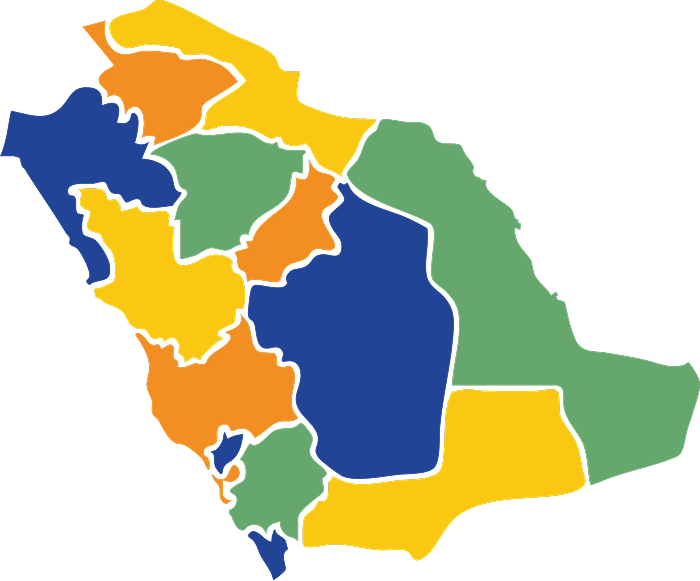
Registered Statistics

Students Count

76594

bars icon
إدارة تعليم الرياض
icon
Students Count 17331
icon
Boys 6359
icon
Girls 10972
إدارة تعليم الشرقية
icon
Students Count 10100
icon
Boys 4001
icon
Girls 6099
إدارة تعليم جدة
icon
Students Count 9833
icon
Boys 4451
icon
Girls 5382
إدارة تعليم المدينة المنورة
icon
Students Count 5336
icon
Boys 1998
icon
Girls 3338
إدارة تعليم مكة المكرمة
icon
Students Count 5017
icon
Boys 2157
icon
Girls 2860
إدارة تعليم الأحساء
icon
Students Count 4638
icon
Boys 1832
icon
Girls 2806
إدارة تعليم عسير
icon
Students Count 4110
icon
Boys 1579
icon
Girls 2531
إدارة تعليم جازان
icon
Students Count 3982
icon
Boys 1288
icon
Girls 2694
إدارة تعليم القصيم
icon
Students Count 3374
icon
Boys 1381
icon
Girls 1993
إدارة تعليم تبوك
icon
Students Count 2926
icon
Boys 1157
icon
Girls 1769
إدارة تعليم الطائف
icon
Students Count 2403
icon
Boys 902
icon
Girls 1501
إدارة تعليم نجران
icon
Students Count 1755
icon
Boys 742
icon
Girls 1013
إدارة تعليم الجوف
icon
Students Count 1447
icon
Boys 624
icon
Girls 823
إدارة تعليم حائل
icon
Students Count 1323
icon
Boys 514
icon
Girls 809
إدارة تعليم الباحة
icon
Students Count 938
icon
Boys 327
icon
Girls 611
إدارة تعليم الهيئة الملكية بالجبيل
icon
Students Count 747
icon
Boys 747
icon
Girls 0
إدارة تعليم الحدود الشمالية
icon
Students Count 601
icon
Boys 270
icon
Girls 331
غير محدد
icon
Students Count 422
icon
Boys 151
icon
Girls 271
إدارة تعليم الهيئة الملكية ينبع
icon
Students Count 311
icon
Boys 311
icon
Girls 0

Did you benefit from the information provided on this page?

4295 out of 5374 visitors liked this page

Last updated: 12 November 2025 - 04:07 AM KSA